
Explained: Russian President Vladimir Putin’s State Visit to India
Table of Contents
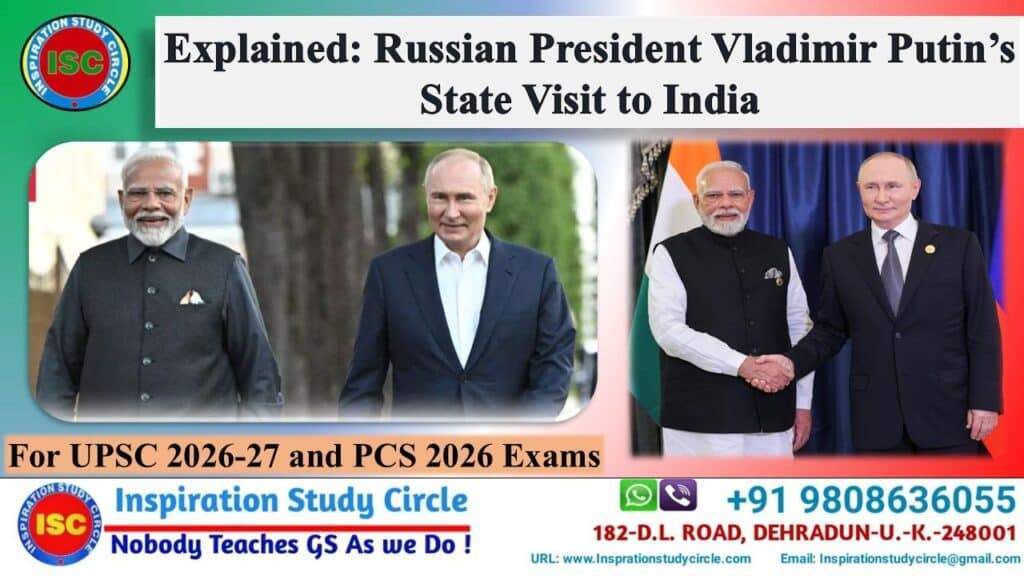
Russian President Vladimir Putin conducted a state visit to India on December 4–5, 2025, for the 23rd India-Russia Annual Summit. The visit aimed to strengthen the “Special and Privileged Strategic Partnership” and resulted in numerous agreements and discussions across various sectors.
Core Drivers of this State Visit
- Institutionalised Partnership: The visit was part of the long-standing and highly institutionalised “Special and Privileged Strategic Partnership,” which has involved annual summits since 2000. The 2025 summit marked the 25th anniversary of this strategic partnership, providing a formal platform to review and guide the future of bilateral ties.
- Geopolitical Realignment: The visit was Putin’s first to India since the beginning of the war in Ukraine in February 2022. Amid significant Western pressure and sanctions on Moscow, Russia aimed to demonstrate it was not internationally isolated and to deepen ties with a major, non-aligned power like India.
- Indian Strategic Autonomy: For India, hosting Putin reaffirmed its policy of strategic autonomy, balancing its relations with both the West and Russia based purely on national interests. This was particularly significant given recent US tariff pressures related to India’s continued purchase of Russian crude oil at discounted rates.
- Economic and Energy Security: Economic cooperation has become a cornerstone of the relationship, with Russia becoming India’s largest crude oil supplier since 2022. The visit aimed to secure long-term, uninterrupted energy supplies, explore alternative payment mechanisms outside the US dollar-based system, and address a significant trade imbalance by boosting Indian exports to Russia.
- Defence Cooperation: Defence remains a vital pillar of the relationship, with 60-70% of India’s military equipment being of Russian origin. The visit provided an opportunity to address issues like delivery delays for systems such as the S-400, explore joint production of spare parts under the ‘Make in India’ initiative, and discuss future collaborations in advanced military technologies.
In essence, the visit was a strategic effort by both nations to reinforce their time-tested partnership and ensure stability in their relationship amidst a turbulent and fragmenting global order.
Key Highlights of this State Visit
- Economic Cooperation & Trade Target: A “Programme for the Development of Strategic Areas of India-Russia Economic Cooperation till 2030” was adopted, aiming for a bilateral trade target of $100 billion. Discussions continued on a Free Trade Agreement with the Eurasian Economic Union.
- Energy Security: Russia is committed to ensuring “uninterrupted” fuel and crude oil shipments and exploring new cooperation in small modular nuclear reactors and floating nuclear power plants. Long-term supply of fertilisers was also a focus.
- Defence and Military-Technical Cooperation: Both sides agreed to reorient defence ties toward joint research, development, and co-production under ‘Make in India’, encouraging local manufacturing of spare parts.
- Mobility and Visas: India announced new visa facilities for Russian citizens, including free 30-day e-tourist visas and 30-day group tourist visas on a reciprocal basis. An agreement was signed for temporary labour activity involving citizens to address labour shortages in Russia, utilising skilled Indian workers.
- Connectivity and Logistics: Leaders emphasised accelerating the use of the International North-South Transport Corridor and the Chennai–Vladivostok Corridor. An MoU was signed for training specialists for ships operating in polar waters.
- Multilateral Cooperation: Russia reiterated support for India’s permanent membership in a reformed UN Security Council. Russia also officially adopted the Framework Agreement to join the India-led International Big Cat Alliance.
- Use of National Currencies: Both nations agreed to continue working towards enhancing the settlement of bilateral trade in their national currencies.
Impact of this State Visit on Russia
Russian President Vladimir Putin’s state visit to India in December 2025 provided Russia with significant geopolitical validation against Western isolation efforts and offered crucial pathways for economic stability through diversified trade and energy cooperation.
Geopolitical and Diplomatic Impact
- Countering Isolation: The high-profile visit and warm reception, including a ceremonial welcome and 21-gun salute, served as a strong signal that Russia is not internationally isolated, contrary to Western narratives.
- Reaffirmation of Partnership: The summit marked the 25th anniversary of their Strategic Partnership, allowing both nations to emphasise the “resilience” and “continuity” of their long-standing ties despite global pressures and sanctions related to the Ukraine conflict.
- Multilateral Support: Russia secured India’s continued cooperation within key multilateral forums like BRICS, the Shanghai Cooperation Organisation (SCO), and G20, where both countries support the formation of a “multipolar world order”. Russia also reiterated its support for India’s permanent membership in a reformed UN Security Council.
Economic and Trade Impact
- Securing Energy Markets: Russia, already India’s largest crude oil supplier, secured an assurance for “uninterrupted” fuel shipments, which is vital for maintaining a consistent revenue stream amid Western sanctions and price caps.
- Diversifying Trade Avenues: The new economic cooperation program until 2030 aims to move trade beyond a heavy reliance on oil, focusing on non-energy and non-defence sectors like pharmaceuticals, agriculture, and IT. This helps Russia develop new markets beyond Europe and China.
- Alternative Payment Mechanisms: Both countries agreed to continue efforts to settle bilateral trade in their national currencies (Rupee-Rouble settlement), reducing reliance on the U.S. dollar and mitigating the impact of Western sanctions on banking channels.
- Addressing Labour Shortages: A significant agreement on temporary labour activity was signed, which will facilitate the movement of skilled Indian workers to Russia, directly addressing Russia’s projected manpower shortages of up to three million by the end of the decade.
Defence and Technology Impact
- Sustaining Defence Ties: The visit ensured the continuity of military and military-technical cooperation, which is essential for the maintenance of India’s vast inventory of Russian-origin military equipment. The focus is shifting to joint R&D and co-production of spare parts within India.
- Technology Cooperation: Agreements in civil nuclear energy, space technology, and critical minerals highlighted ongoing and future collaborations that provide Russia with a market for its advanced technology and scientific expertise.
- Leasing of Submarine: The completion of a $2 billion deal to lease a nuclear attack submarine to India reinforced defence ties at a high-technology level and demonstrated a transfer of sensitive military systems that few other nations offer.
Impact of Vladimir Putin’s State Visit on India
The Russian President’s visit had a dual impact on India: it reaffirmed New Delhi’s policy of strategic autonomy and secured essential energy and defence cooperation, while simultaneously exposing the challenges of navigating Western sanctions and a significant trade imbalance.
Positive Impacts and Gains for India
- Reinforced Strategic Autonomy: The visit demonstrated India’s ability to maintain a strong, independent foreign policy by engaging with Russia on its own terms, despite Western pressure to limit ties due to the Ukraine conflict.
- Assured Energy Security: Russia’s commitment to “uninterrupted” fuel, oil, and gas shipments provides crucial energy stability for India’s fast-growing economy and helps stabilise domestic energy costs amid global volatility.
- Defence Maintenance and Modernisation: While no new major deals were announced, the visit secured commitments for continued military-technical cooperation, including the joint production of spare parts and components under the ‘Make in India’ initiative. This is vital for sustaining India’s large inventory of Russian-origin equipment.
- Economic Diversification: The “Programme for Economic Cooperation till 2030” and agreements on new corridors like the Chennai–Vladivostok Eastern Maritime Corridor and International North-South Transport Corridor (INSTC) aim to diversify trade beyond just energy and address India’s export deficit.
- Labour Mobility: A significant “Labour Mobility Agreement” will facilitate skilled Indian workers to take up jobs in Russia, offering new employment avenues and addressing Russia’s manpower shortages.
- Multilateral Support: Russia reiterated its support for India’s bid for a permanent seat in a reformed UN Security Council, enhancing India’s diplomatic standing.
Challenges and Potential Negative Impacts
- Diplomatic Tightrope Walk: The warm reception of Putin heightened India’s diplomatic tightrope walk, with subtle pressure from Western partners (Europe and the U.S.) ahead of crucial upcoming trade and political summits.
- Trade Imbalance: Despite an ambitious $100 billion trade target by 2030, the trade structure remains heavily lopsided, with Indian exports being disproportionately low compared to the massive oil imports.
- Payment Issues: Western sanctions continue to cause friction in banking channels, making smooth financial transactions difficult, which dampens the potential for increased Indian exports.
- Defence Delivery Delays: The Ukraine war has caused delays in the delivery of critical systems like S-400 missiles, which impacts India’s defence readiness and forces it to accelerate indigenous production.
- Concerns over Russian Alignment with China: Russia’s growing dependence on China limits its ability to remain neutral in an India-China conflict, which could be a long-term strategic concern for New Delhi.
The Gifts given by India to the Russian President during his State Visit
During his state visit to India in December 2025, Prime Minister Narendra Modi presented Russian President Vladimir Putin with a thoughtfully curated collection of gifts that showcased India’s rich cultural heritage and craftsmanship.
The gifts included:
- A Russian edition of the Srimad Bhagavad Gita: This sacred Hindu scripture, part of the epic Mahabharata, was a personal gift from PM Modi, symbolising the deep spiritual and cultural connection between the nations.
- Fine Assam Black Tea: Known for its robust, malty flavour and bright colour, this GI-tagged tea, grown in the Brahmaputra valley, highlights India’s rich agricultural heritage.
- Kashmiri Saffron: Locally known as ‘Zafran’ or “Red Gold,” this premium saffron from the highlands of Kashmir is prized for its colour, aroma, and flavour and has significant cultural importance.
- An Ornate Murshidabad Silver Tea Set: The handcrafted tea set from West Bengal featured intricate engravings, reflecting the region’s traditional metalwork artistry and the shared cultural importance of tea in both countries.
- A Handcrafted Silver Horse: This artefact from Maharashtra, known for its detailed artistry, symbolises dignity and valour in both Indian and Russian cultures. Its forward-moving stance represents the strong and steadily progressing partnership.
- A Handcrafted Marble Chess Set: Sourced from Agra under the ‘One District One Product’ (ODOP) initiative, this set blended fine craftsmanship with functional elegance, featuring individually inlaid motifs and contrasting stone chess pieces.
These gifts were chosen to reflect the diversity of Indian traditions and strengthen the diplomatic bond between the two nations.
The Way Forward
The way forward for the India-Russia partnership following the December 2025 state visit involves the committed implementation of the “Programme for the Development of Strategic Areas of India-Russia Economic Cooperation till 2030,” focusing on economic diversification, enhancing connectivity, and navigating the challenges posed by Western sanctions.
Key areas defining the future trajectory of the relationship include:
Achieving a bilateral trade target of $100 billion by 2030 requires addressing logistical challenges and exploring an India-EAEU Free Trade Agreement. Both nations aim to conduct bilateral trade in their national currencies to mitigate the impact of sanctions and reduce reliance on the U.S. dollar. Diversification beyond defence and oil is focused on pharmaceuticals, agriculture, IT, critical minerals, and high-tech manufacturing.
Developing transport corridors like the INSTC, Chennai–Vladivostok Eastern Maritime Corridor, and the Northern Sea Route is crucial for efficient trade. India’s potential role as an Arctic Council Observer and training agreements suggest future Arctic region engagement.
The defence partnership emphasises joint research, development, and co-production under ‘Make in India’. Progress continues on the Kudankulam Nuclear Power Plant, with discussions for a second site.
Sustaining political commitment is vital to implement agreements and manage relations with Western partners. Effective implementation of the labour mobility agreement is needed.
The visit outlined a long-term plan, but overcoming challenges requires continuous effort. More details can be found in the “Joint Statement following the 23rd India – Russia Annual Summit.”
Recent Post
Why Dehradun is the New Hub for IAS Preparation?
Why Dehradun is the New Hub for IAS Preparation? Table of Contents Let’s be honest—the dream of seeing your name
Civil Services After 12th: UPSC Foundation Course 2028-2029
Civil Services After 12th: UPSC Foundation Course 2028-2029 Table of Contents Civil Services After 12th UPSC Foundation Course Inspiration Study
Foreign Contribution (Regulation) Amendment Bill 2026
Foreign Contribution (Regulation) Amendment Bill 2026 Table of Contents Foreign Contribution (Regulation) Amendment Bill 2026 The Foreign Contribution (Regulation) Amendment Bill,
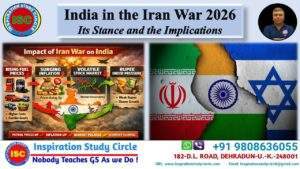
India in the Iran War 2026
India in the Iran War 2026 Table of Contents India in the Iran War 2026 India has remained neutral in the 2026
The Constitutional Boundary of SC Status: The Latest Supreme Court Judgement
The Constitutional Boundary of SC Status: The Latest Supreme Court Judgement Table of Contents In a significant judgement delivered on
Detailed Geography and Maps for UPSC 2026
Detailed Geography and Maps for UPSC 2026 Table of Contents Detailed Geography and Maps for UPSC 2026 Mastering map-based questions