UKPSC Lower PCS Syllabus 2026: Complete Prelims and Mains Syllabus with Exam Pattern
The UKPSC Lower PCS 2026 syllabus has three stages: a 150-mark objective Prelims (100 General Studies and 50 General Aptitude questions), a 600-mark written Mains of four papers (General Hindi, Essay, General Studies I and II), and a 75-mark interview. Uttarakhand runs through every stage, and you must score at least 35% in General Hindi.
By Nisheeth Saxena, Inspiration Study Circle, Dehradun · Updated 14 November 2026 · Based on the official UKPSC advertisement of 6 November 2026 (PDF)
Key takeaways
- Three stages: Prelims (150 marks), Mains (600 marks) and interview (75 marks). Final merit is built on Mains plus interview, 675 marks.
- Prelims is one paper: 150 questions in 2 hours, with one-fourth negative marking. Its marks are not added to the final merit.
- Mains has four papers, not two: General Hindi 100, Essay 100, GS I 200 and GS II 200. General Hindi needs a minimum of 35%.
- Uttarakhand is everywhere: five of the ten Prelims GS topics, a full state section in each GS paper, and a whole essay section.
- Qualifying marks apply at each stage: for unreserved candidates, 35% in Prelims, 40% in Mains and 45% overall.
- Deadline: apply by 26 November 2026 on pscuk.net.in. The Prelims date has not been announced yet.
Table of Contents
When the Lower PCS 2026 notification came out on 6 November, most of the questions we heard were about dates and posts. The syllabus questions come a little later, usually when someone opens the 79-page PDF, scrolls past the forms and certificates, and finds the syllabus split across two languages and two fonts. This page puts the whole syllabus in one place, in plain English, with the Hindi terms where they matter. Every line below is taken from Appendix 02 and Appendix 07 of the official advertisement. Where the commission has not said something, we say so.
What Is the UKPSC Lower PCS 2026 Exam Pattern?
The Lower PCS 2026 exam has three stages, and each one filters candidates for the next: an objective Prelims, a descriptive Mains and a personality test.
| Stage | Paper | Marks | Time | Questions |
|---|---|---|---|---|
| Prelims (objective) | General Studies and General Aptitude Test | 150 | 2 hours | 150 |
| Mains (descriptive) | Paper I: Language (General Hindi) | 100 | 2 hours | 6 |
| Paper II: Essay | 100 | 2 hours | 2 | |
| Paper III: General Studies I | 200 | 3 hours | 20 | |
| Paper IV: General Studies II | 200 | 3 hours | 20 | |
| Interview | Personality test | 75 | ||
| Final merit | Mains written + interview | 675 |
Two notes from the advertisement shape everything else. Prelims marks are not added to the Mains marks for merit, so Prelims is purely a screening test. And a minimum of 35% in General Hindi is compulsory. The Prelims is offered at 19 centre cities, including Dehradun, Haridwar, Haldwani, Almora, Pithoragarh and Srinagar, and the commission may add or drop cities depending on numbers.
What Is the Lower PCS 2026 Prelims Syllabus?
The Prelims is a single paper of 150 questions: Part 1 has 100 General Studies questions worth 100 marks, and Part 2 has 50 General Aptitude questions worth 50 marks. There is no separate CSAT paper.
Part 1: General Studies (100 questions)
| # | Topic | What the commission lists |
|---|---|---|
| 1 | General Science and Computer Operation | Day-to-day understanding and application of science and computers, as expected from an educated person without special study of the subject |
| 2 | History of India and the Indian National Movement | Political, social, economic and cultural aspects of ancient, medieval and modern India; the freedom movement, growth of nationalism and Independence |
| 3 | Indian Polity and Economy | Constitution, Panchayati Raj and community development, broad features of the Indian economy and planning |
| 4 | Geography and Demography of India | Geographical, ecological and socio-economic aspects and the demography of India |
| 5 | Current Events | Important Uttarakhand, national and international events, including sports |
| 6 | History of Uttarakhand | Ancient period (to 1200 AD), medieval period (1200 to 1815 AD), important dynasties, Gorkha invasion and rule, British rule, Tehri State, the freedom movement, the statehood movement, the role of Uttarakhand’s people in the armed forces, social reform movements and welfare programmes |
| 7 | Culture of Uttarakhand | Castes and tribes, religious and folk beliefs, literature and folk literature, customs, costumes and ornaments, fairs and festivals, food, art and crafts, dance, songs and instruments, tourist places, sports and awards, famous writers and poets |
| 8 | Geography and Demography of Uttarakhand | Himalayan features, rivers, mountains, climate, forests and horticulture, crops and irrigation, land holdings, disasters and disaster management, water crisis and watershed management, remote-area problems, environmental movements, biodiversity, and population: density, sex ratio, literacy and out-migration |
| 9 | Economic, Political and Administrative Background of Uttarakhand | Elected governments and their policies, state services, Panchayati Raj and cooperatives; land systems under the Gorkhas and the British (Thokdari, van panchayat, civil and soyam forest, Kesar-i-Hind or benap land, Nazul, nayabad settlements), post-Zamindari land reforms, revenue police; Indo-Tibetan trade, land holdings, and the Begar and Dadwar systems |
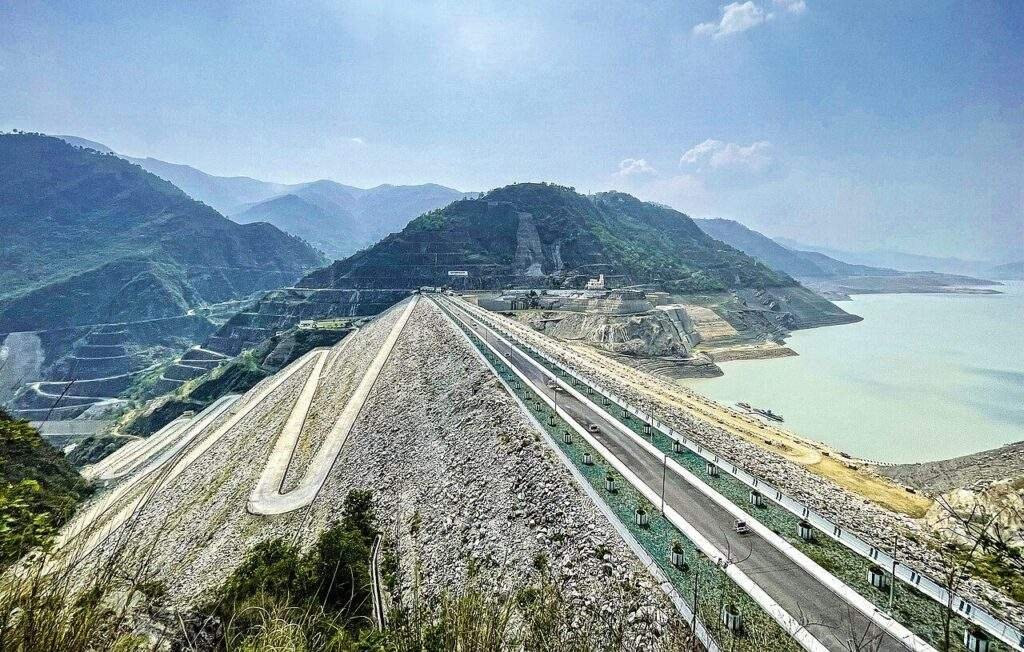
| 10 | Economic and Natural Resources of Uttarakhand | Human resources, education and major institutes, forests, water, herbs, agriculture, animals, hydropower, minerals, tourism, small and village industries, poverty and employment schemes, contribution to state GDP, planning priorities, mandis and the main features of the state budget |

Part 2: General Aptitude Test (50 questions)
This part tests general intelligence through both verbal and non-verbal questions. The advertisement lists:
- Analogies, similarities and differences
- Space visualisation, visual memory, discrimination and observation
- Problem solving, analysis, judgement and decision making
- Relationship concepts, verbal and figure classification
- Arithmetical reasoning, arithmetical number series and arithmetical computation
- Dealing with abstract ideas, symbols and their relationships
How is the Prelims marked?
The Prelims uses negative marking: one-fourth of a question’s marks are cut for each wrong answer. The other rules from the advertisement:
- Marking more than one option counts as a wrong answer, even if one of them is right.
- A question you leave blank carries no penalty.
- If a question has a printing or factual error, the English version is treated as standard.
- Calculators and other calculating devices are not allowed.
- Objections are taken online in two rounds. First, the question paper is published after the exam and you get 7 days to object to the structure of questions and options, free of charge. Then the provisional answer key is published and you get 7 days to object to answers, at ₹50 per question.
What Is the Lower PCS 2026 Mains Syllabus?
The Mains is a written, descriptive exam of four papers totalling 600 marks: General Hindi, Essay, General Studies I and General Studies II. Here is what each paper covers.
Paper I: General Hindi (सामान्य हिन्दी), 100 marks
| Section | What it covers | Marks |
|---|---|---|
| 1. वर्ण एवं शब्द (letters and words) | स्वर एवं व्यंजन, संधि, समास, उपसर्ग एवं प्रत्यय, व्याकरणिक कोटियाँ (संज्ञा, सर्वनाम, विशेषण, क्रिया, क्रिया विशेषण, अव्यय) | 10 |
| 2. शब्द रचना और अर्थ (word formation and meaning) | पर्यायवाची, विलोम, शब्द-युग्म, वाक्यांश के लिए एक शब्द, तत्सम, तद्भव, देशज, विदेशी, रूढ़, यौगिक, योगरूढ़ | 15 |
| 3. वाक्य रचना (sentence structure) | वाक्य के अवयव और भेद, वाक्यान्तरण, शब्द एवं वाक्य शुद्धिकरण, लोकोक्तियाँ एवं मुहावरे | 10 |
| 4. अपठित (unseen passage) | Five language and grammar questions on an unseen passage, 3 marks each | 15 |
| 5. संक्षेपण (précis) | शीर्षक (title) 3, सारांश (summary) 6, रेखांकित अंश की व्याख्या (explaining the underlined part) 6 | 15 |
| 6(a). हिन्दी आलेखन (official drafting) | सरकारी पत्र, अर्ध-सरकारी पत्र, परिपत्र, अनुस्मारक, कार्यालय-आदेश, कार्यालय-ज्ञापन, अधिसूचना, रिपोर्ट या प्रतिवेदन | 15 |
| 6(b). अनुवाद (translation) | English passage into Hindi, and Hindi passage into English | 10 + 10 |
| Total | 100 |
Look at the last two rows. Thirty-five marks, more than a third of the paper, go to official drafting and translation, the everyday work of a Nayab Tehsildar or an inspector. This is a practical paper, and the 35% minimum means it can end your attempt on its own.
Paper II: Essay, 100 marks
You write two essays of about 700 words each in 2 hours, one from each section.
| Section A (general) | Section B (Uttarakhand) |
|---|---|
| Literature and culture | Historical, artistic and cultural scenario of Uttarakhand |
| Social, political and economic topics | Social and cultural structure of Uttarakhand |
| National and international topics | Environmental protection and disaster management in Uttarakhand |
| Policies on national development, science and technology | Role of women in Uttarakhand’s economy and polity, and women’s empowerment |
| Environment and natural disasters (landslide, deluge, drought, earthquake) | Economic and geographical scenario and tourism of Uttarakhand; the migration problem |
Paper III: General Studies I, 200 marks
GS I covers history and culture, polity and administration, science and technology, and ethics, each for India and, where relevant, for Uttarakhand.
- History, art, culture and society of India: art forms, literature, painting and music; Bhakti and Sufi movements; socio-religious movements; architecture; important rulers of ancient and medieval India; modern India from the rise of the British, their economic policies and the drain of wealth, to the freedom movement from Non-Cooperation to the Cabinet Mission, Partition, and the challenges after Independence up to the Five-Year Plans and NITI Aayog.
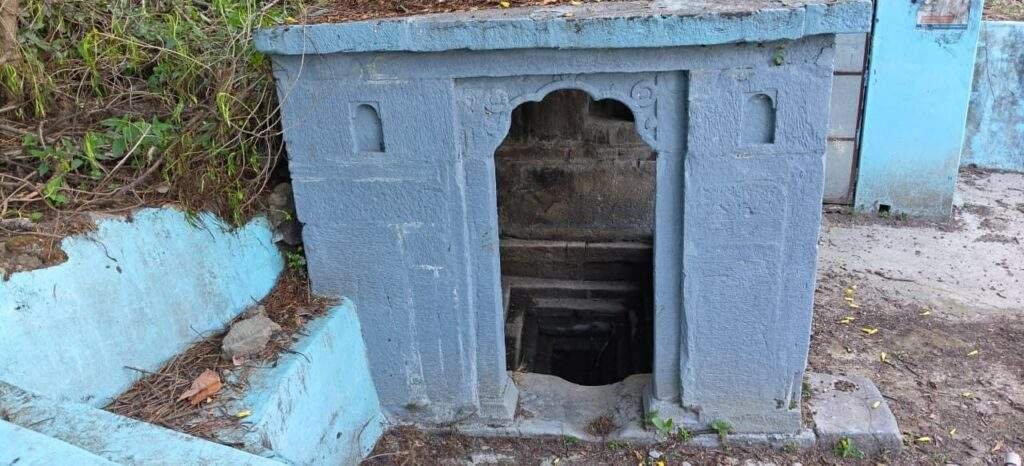
- History, arts, culture and society of Uttarakhand: prehistory and archaeological sites, the Kunindas and Yaudheyas, the Katyuri, Parmar and Chand dynasties, the Gorkha invasion, colonial land revenue and forest policy, Coolie Begar, Dola-Palki and Gadi-Sadak protests, Gandhi’s visits in 1915 and 1929, the INA, Tehri Riyasat with Dhandhak and the Prajamandal movement, and the statehood struggle. Culture includes religious cults, temple architecture, rock, metal and wooden art, hydraulic architecture (kup, naula, khal, gharat), Jagar, Pandav Lila, Nanda Raj Jat, Char Dham, and Garhwali and Kumauni language and literature.
- Indian Constitution, political and administrative system: making of the Constitution, rights and duties, Union and state executive and legislatures, judiciary and judicial review, elections and anti-defection law, federalism and local bodies, constitutional bodies, NITI Aayog, tribunals, e-governance, Lokpal, RTI, RTE, citizen charters, ARC recommendations, and internal security.
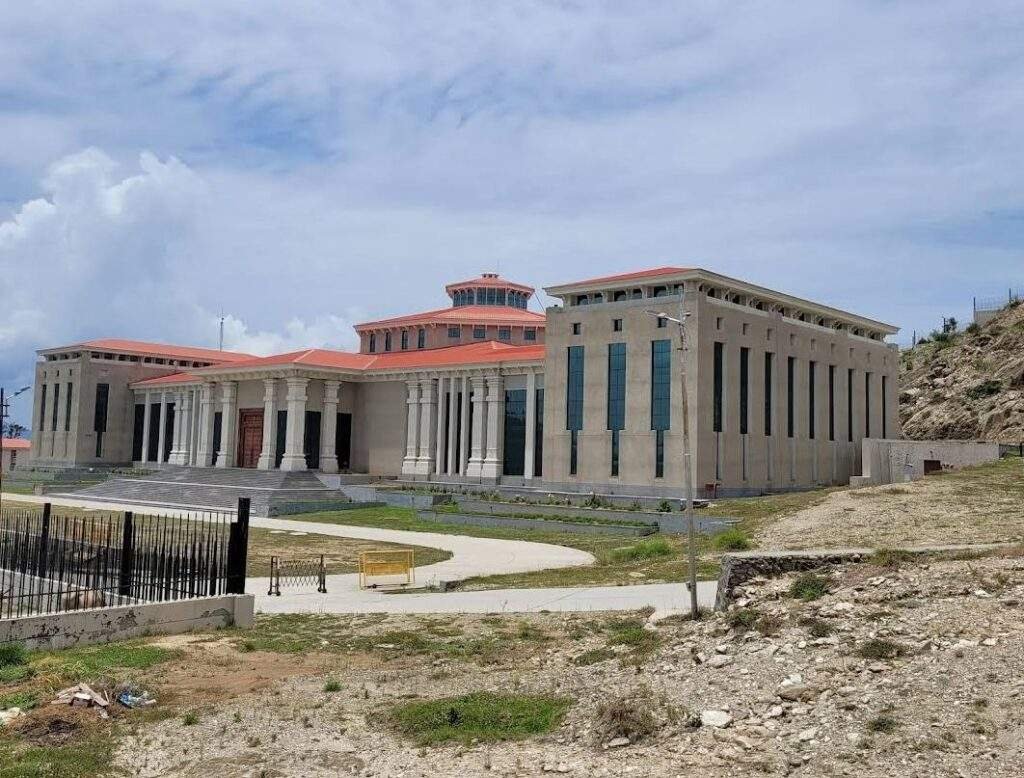
- Political and administrative system of Uttarakhand: the Assembly, the High Court and lower courts, Lok Adalat, Lokayukta, the Public Services Tribunal, parties and elections, PRIs and urban local bodies, the Uttarakhand Right to Service Act, 2011, social audit and vigilance, state schemes, and social inclusion laws such as the EWS reservation Act, 2019, the horizontal reservation for women Act, 2022, the 10% reservation for statehood activists, and the State Uniform Civil Code.
- General science, technology and environment: pollution, global warming and ozone depletion, biotechnology, nutrition and disease, polymers and green chemistry, basic physics in daily life, computers, office software, the internet, cyber crime and cyber law, and e-governance in Uttarakhand.
- Human values, work culture and civil service aptitude: human values, work culture, attitude, aptitude and foundational values, emotional intelligence, ethics in public administration, probity, and the ideas of Gandhi, Ambedkar, Vivekananda, Tagore and APJ Abdul Kalam, with case studies.
Notice how local the GS I syllabus gets. The naula above, a stone structure built over a mountain spring, is named in the syllabus itself, alongside the gharat (water mill). Questions on topics like these reward students who know the state, not just the textbook.
Paper IV: General Studies II, 200 marks
GS II covers the economy, geography and disaster management of India and Uttarakhand, plus basic statistics and current events.
- Indian economy: national income, HDI and inclusive growth, planning and NITI Aayog, poverty, inequality, inflation and unemployment, agriculture, food security and farm subsidies, industry, MSMEs and disinvestment, taxation and GST, fiscal federalism, the Union Budget, foreign trade and BoP, public debt, financial reforms, digital payments and RBI monetary policy, urbanisation and infrastructure.
- Economy of Uttarakhand: state GDP and per capita income, natural and human resources, energy and water, trade and industry, transport, the state budget and debt, human development, schemes, migration, women’s economic empowerment, agriculture and rural development, banking, and the economics of tourism and pilgrimage.
- Geography of India and demography: physical features and geology, drainage and river interlinking, El Niño, La Niña and western disturbances, soils and forests, national parks and hotspots, international boundaries, agriculture, minerals and energy, industry, transport corridors, regional disparities, natural hazards, and population and migration.
- Geography of Uttarakhand, demography and disaster management: the origin and physiographic divisions of the Uttarakhand Himalaya, rivers and mountains, climate, forests, horticulture, crops and irrigation, land holdings, disasters and the state’s mitigation efforts, the water crisis and watershed management, remote-area problems, the Chipko movement, biodiversity, and out-migration.
- Statistical analysis, graphs and diagrams: measures of central tendency and dispersion, and reading graphs and diagrams.
- Current events: international and national events, including sports, at four levels: global, Asia, India and Uttarakhand.
One honest note: the advertisement does not give marks for each section inside GS I or GS II. It gives only the total of 200 marks and 20 questions per paper. If someone tells you a fixed section-wise split, ask for the source.
How Much of the Syllabus Is About Uttarakhand?
A large part, and at every stage. The Lower PCS syllabus asks for detailed knowledge of the state, not just a few Uttarakhand facts:
| Stage | Uttarakhand content |
|---|---|
| Prelims GS | 5 of the 10 topics (history, culture, geography and demography, political and administrative background, economy and resources), plus Uttarakhand current events |
| Mains Essay | The whole of Section B, one of your two essays |
| Mains GS I | Separate sections on Uttarakhand’s history, art and culture and on its political and administrative system, plus e-governance in Uttarakhand |
| Mains GS II | Separate sections on Uttarakhand’s economy and on its geography, demography and disaster management, plus Uttarakhand current events |
The names to know are very specific: Thokdari, Nazul, benap land, the Begar and Dadwar systems, the Right to Service Act of 2011, the Veer Chandra Singh Garhwali Paryatan Swarozgar Yojana and the Deen Dayal Upadhyay Home Stay scheme all appear in the syllabus by name. We keep a running Uttarakhand-specific GK checklist that maps well onto these topics.
What Are the Minimum Qualifying Marks for Lower PCS 2026?
Appendix 07 of the advertisement sets a minimum percentage at each stage, under the commission’s 2022 rules on preparing results. You are considered for the merit list only if you cross these.
| Category | Prelims | Mains (written) | Final (written + interview) |
|---|---|---|---|
| Unreserved | 35% | 40% | 45% |
| Uttarakhand OBC | 30% | 35% | 40% |
| EWS | 30% | 35% | 40% |
| Uttarakhand SC and ST | 25% | 30% | 35% |
| Dependants of Uttarakhand freedom fighters | 25% | 30% | 35% |
| Uttarakhand ex-servicemen | 25% | 30% | 35% |
| Uttarakhand persons with disability | 20% | 25% | 30% |
These are floors, not cut-offs. The actual cut-off depends on the number of candidates and posts, and is usually higher.
Is the Lower PCS Syllabus the Same as Upper PCS?
No. The general studies topics overlap a lot, but Lower PCS is a smaller exam. Its Prelims is one paper with aptitude questions built in, while Upper PCS has a separate CSAT paper, and its Mains has four papers. The posts are different too: all 54 Lower PCS 2026 posts are Group C non-gazetted posts, such as Nayab Tehsildar, Excise Inspector and Marketing Inspector. If you are preparing for Upper PCS anyway, Lower PCS is a natural second exam in the same year. Our guide to the difference between Upper and Lower PCS explains the choice in more detail.
How Should You Prepare for Lower PCS 2026 From Here?
Start with the parts of the syllabus that can sink you on their own, then build the rest. The Prelims date is not announced yet, so this plan is in phases rather than dates.
| Phase | Focus | Why |
|---|---|---|
| Now to 26 November | Apply online and pay the fee; read Appendix 02 once fully | Nothing else matters if the form is not in |
| Phase 1 | Prelims GS with Uttarakhand topics 6 to 10; 15 to 20 aptitude questions a day | Half the GS topics are state-specific, and aptitude is 50 of 150 marks |
| Phase 2 | Timed full-length Prelims tests; practise leaving doubtful questions | One-fourth negative marking punishes guessing |
| Alongside, every week | One General Hindi drafting exercise and one translation each way | 35 marks of General Hindi are drafting and translation, and 35% is compulsory |
| After Prelims | GS I and GS II answer writing, two essays a week (one on Uttarakhand) | Mains has 600 marks, and Essay Section B is all about the state |
It is surprisingly easy to lose this exam in General Hindi rather than in GS. Hindi feels like home, so it gets left for the last week, and then the format of an office memo or a précis catches you out. Please give it a little time every week. Old papers are on the UKPSC question paper page, and they are the best way to see how the commission frames questions. If you want guided preparation, our Lower PCS coaching in Dehradun follows this syllabus topic by topic.
Frequently Asked Questions
How many papers are there in the UKPSC Lower PCS 2026 Mains?
Four. Paper I is General Hindi (100 marks, 2 hours), Paper II is Essay (100 marks, 2 hours), and Papers III and IV are General Studies I and II (200 marks and 3 hours each). The written Mains totals 600 marks, and the interview adds 75.
Is there a separate CSAT paper in the Lower PCS Prelims?
No. The Lower PCS Prelims is a single objective paper of 150 questions in 2 hours. Part 1 has 100 General Studies questions and Part 2 has 50 General Aptitude questions, both in the same paper.
Is General Hindi only a qualifying paper in Lower PCS Mains?
It is part of the 600-mark Mains total, and the advertisement also makes it compulsory to score at least 35% in it. So it counts towards your marks and can also eliminate you on its own.
Is there negative marking in UKPSC Lower PCS 2026?
Yes, in the objective Prelims. One-fourth of the marks for a question are cut for every wrong answer. Marking more than one option also counts as wrong. A question left blank carries no penalty.
Do Prelims marks count in the final Lower PCS merit list?
No. Prelims only decides who goes to the Mains. The final merit is prepared from the Mains written marks and the interview.
How much of the Lower PCS Prelims is about Uttarakhand?
Five of the ten General Studies topics are about Uttarakhand: its history, culture, geography and demography, political and administrative background, and economic and natural resources. Current events also include Uttarakhand. The advertisement does not fix how many questions come from each topic.
Where can I download the official UKPSC Lower PCS 2026 syllabus PDF?
The syllabus is Appendix 02 of the official advertisement (A-1/E-2/DR/LSS/2026-27) on psc.uk.gov.in. In the 79-page PDF, the Prelims syllabus is on pages 28 to 33 and the Mains syllabus on pages 34 to 58, in Hindi first and then English.
Sources
- UKPSC advertisement no. A-1/E-2/DR/LSS/2026-27: Uttarakhand Combined State (Civil) Lower Subordinate Service Examination-2026 (PDF, 79 pages). Syllabus: Appendix 02, pages 26 to 58. Qualifying marks: Appendix 07, page 76.
- UKPSC notice dated 6 November 2026 (PDF)
- UKPSC recruitment page
- UKPSC online application portal
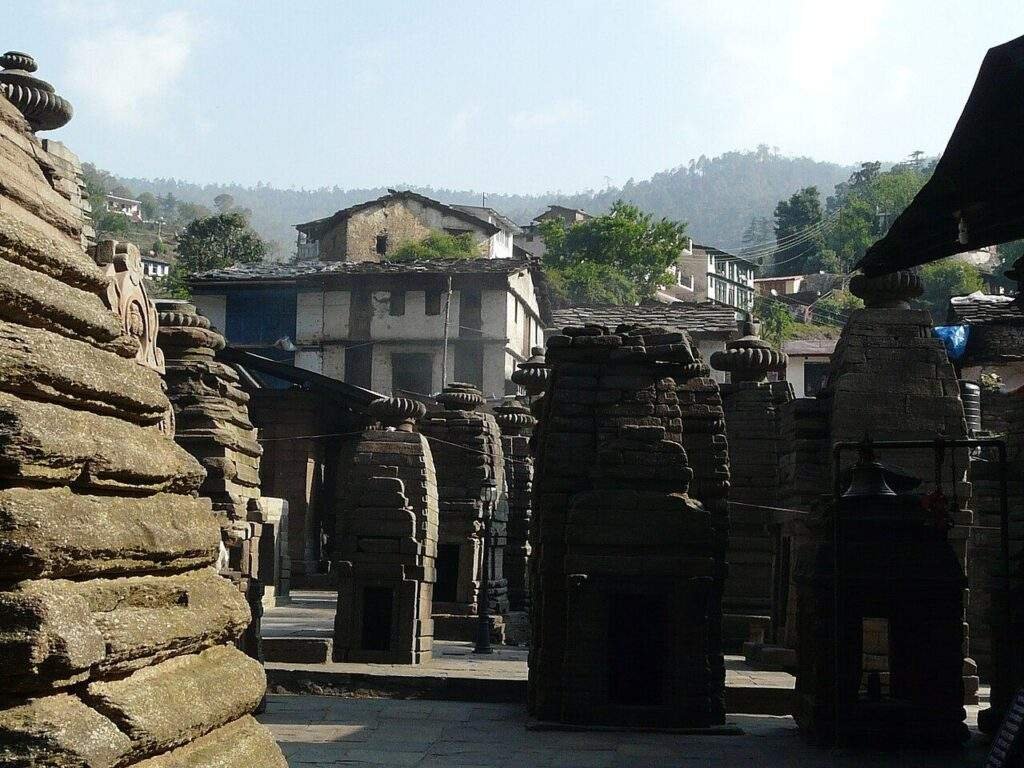
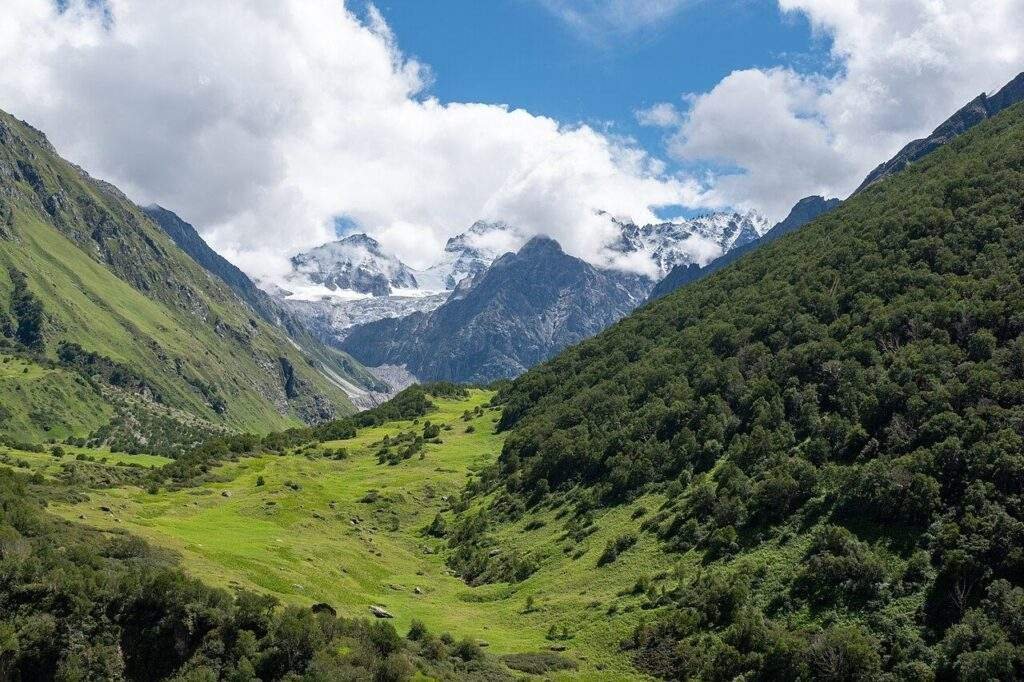
Image credits: Jageshwar temple complex, Almora. Photo: Varun Shiv Kapur, CC BY 2.0, via Wikimedia Commons. A naula in Khola village, Pauri Garhwal. Photo: RachnaChaudhary1, CC BY-SA 4.0, via Wikimedia Commons (resized). Uttarakhand Vidhan Sabha at Bharadisain, Gairsain. Photo: NatashaRostova14, CC0, via Wikimedia Commons. Tehri Dam, Tehri Garhwal. Photo: Dr Vikramjit Kakati, CC BY-SA 4.0, via Wikimedia Commons (resized). Valley of Flowers National Park, Chamoli. Photo: Rohit Sharma, CC BY-SA 4.0, via Wikimedia Commons (resized). Classroom photo: Inspiration Study Circle, Dehradun.
Visit Our Website – Inspiration Study Circle